Description
Colonia has been made since 1916, and it has one well-known problem in a climate like ours: it is an eau de cologne, the lightest concentration there is. In Indore heat it can be gone before you finish your first coffee. This is our answer — the same bright citrus-and-vetiver idea, built at 25% concentration so it survives the day.
What it smells like
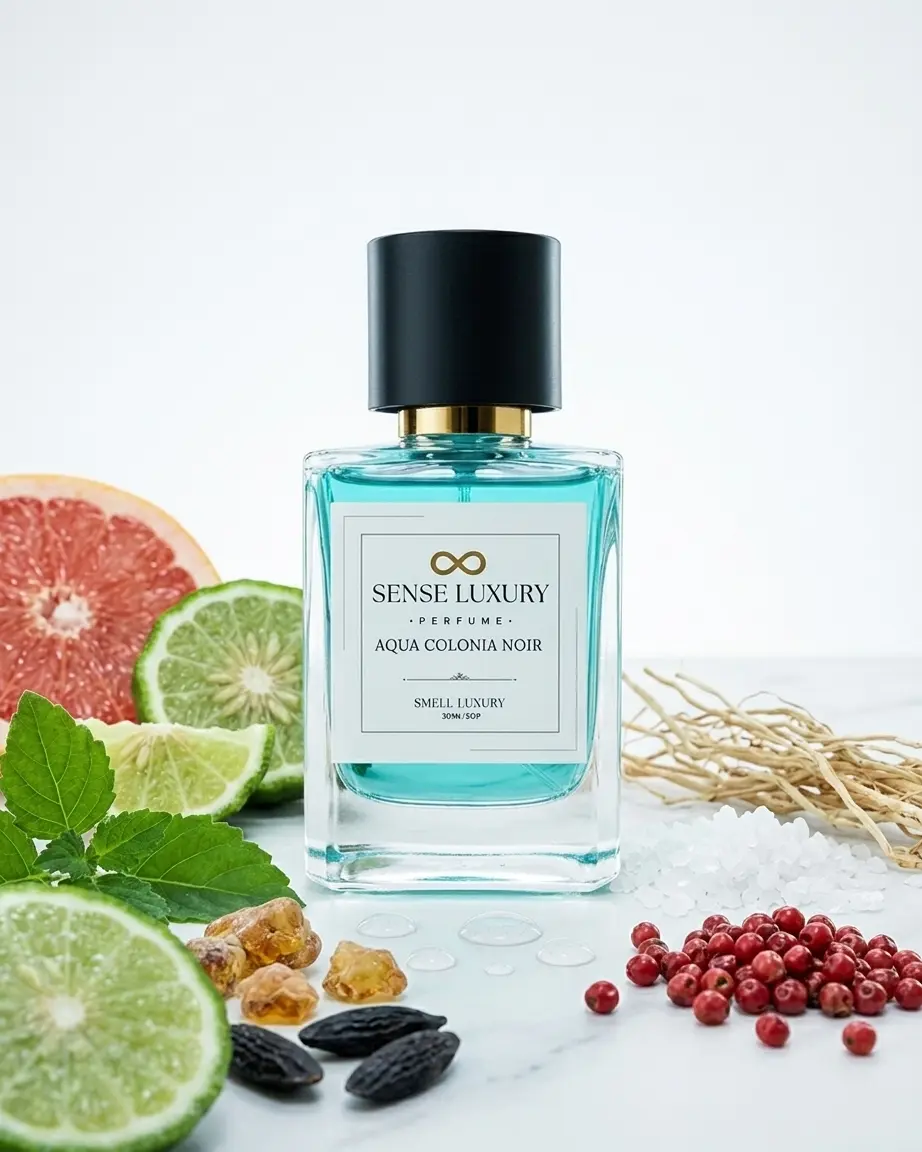
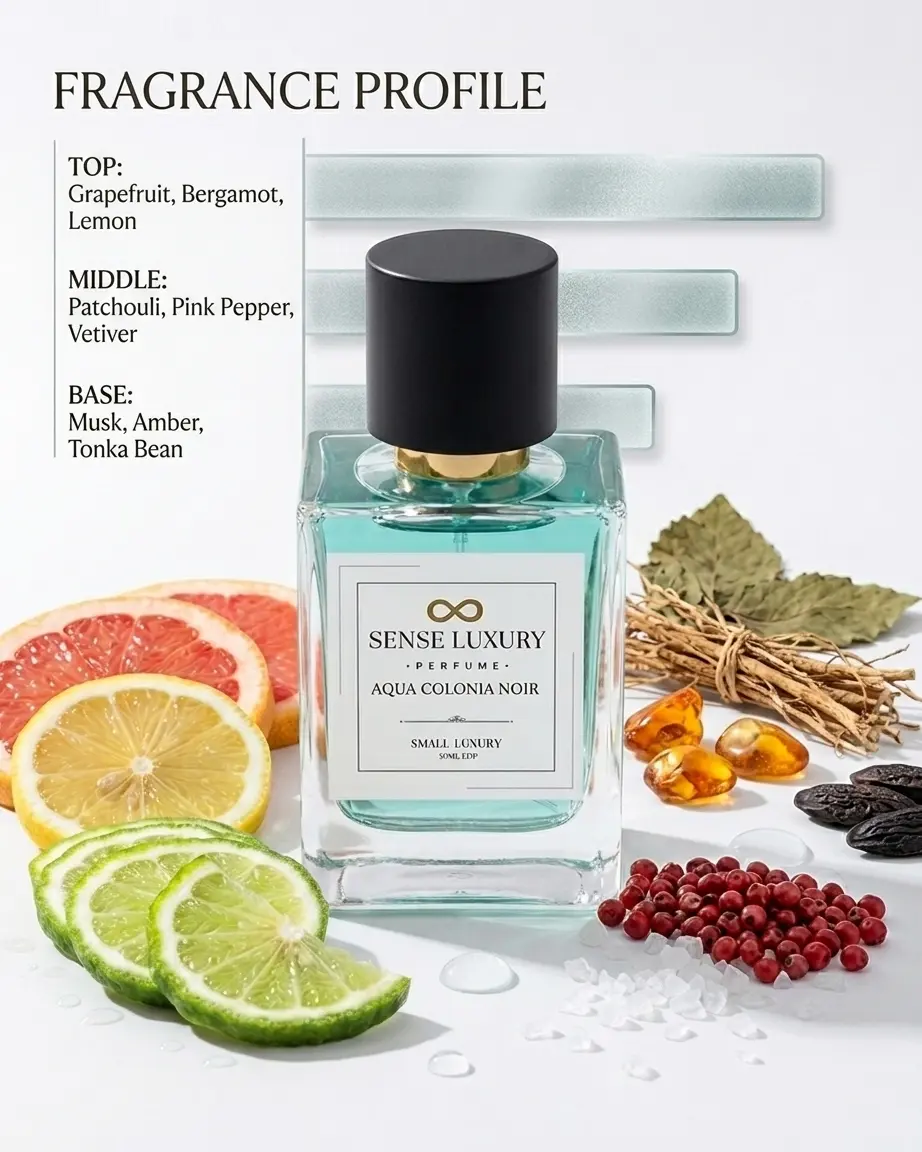
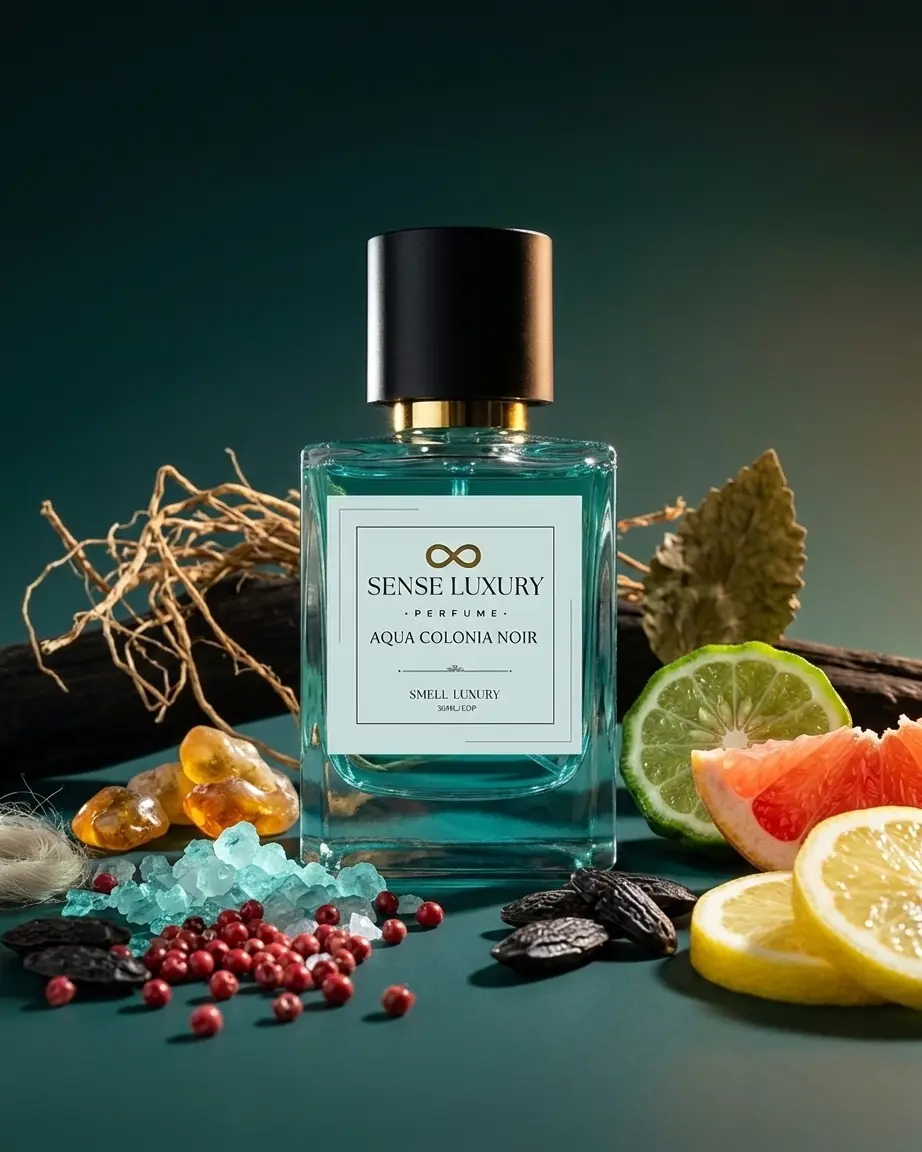
It opens sharp. Grapefruit first, then bergamot and lemon underneath — dry rather than sweet, with none of the candied edge cheap citrus fragrances fall into. If you have ever peeled a lemon and smelled your thumb afterwards, that bitter oil from the rind is the note we chased.
Fifteen minutes in it settles. Pink pepper adds a dry crackle, vetiver brings the earth up underneath, and patchouli anchors it so the citrus has something to sit on instead of evaporating. The last few hours are soft — musk, amber and a touch of tonka, close to the skin rather than filling a room.
The scent, hour by hour
How it behaves, honestly
Who this is for, and who it isn’t
We would rather you bought the right bottle than any bottle, so here is the honest split. If you land on the right-hand column, message us and we will point you at something else in the shop instead.
Buy it if
- You want clean citrus for work, in heatOffice, meetings, commute, humidity. That is what it was built for.
- Most Indian summer scents are too sweet for youNo vanilla-and-fruit sugar here. It stays dry throughout.
- You liked Colonia but it vanished25% concentration holds 4 to 6 hours instead of one.
- You want something unisexCitrus, pepper and vetiver carry no gender coding.
Skip it if
- You want people to smell you across a roomThis projects moderately by design. Ask us for a louder bottle.
- You want an exact replica of ColoniaIt is not one. The arithmetic is two sections below.
- You want a winter or evening scentA dry citrus in December is a thin thing to wear.
- You need 10+ hours from one sprayNo citrus of this structure does that, whatever a listing claims.
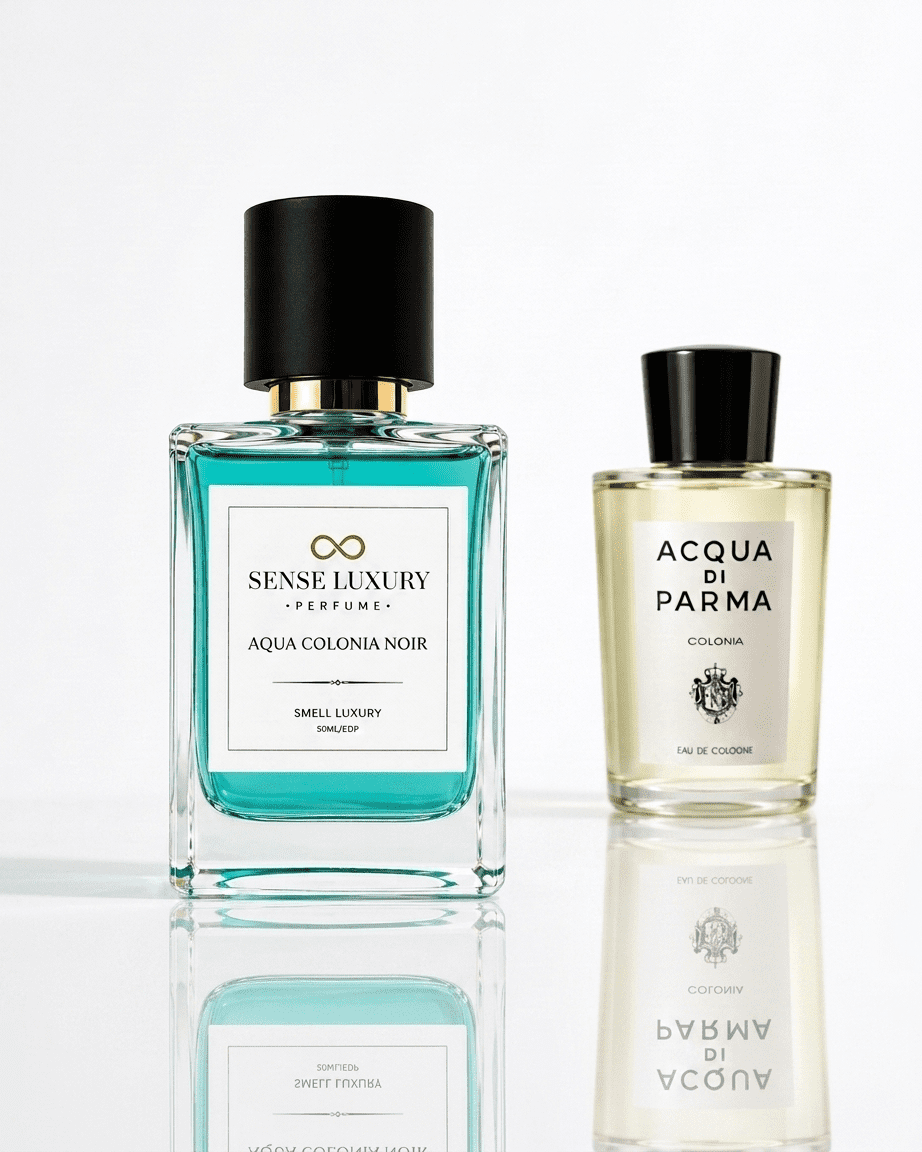
How close is it to Acqua di Parma Colonia?
Closer in character than in composition, and we would rather give you the arithmetic than an adjective. Acqua di Parma publishes ten materials for Colonia: lemon, sweet orange and Calabrian bergamot on top; lavender, rose, verbena and rosemary in the heart; vetiver, sandalwood and patchouli in the base.
Materials shared with Colonia
4 of 10
Counted against the note list Acqua di Parma publishes on its own product page.
Sweet orangeLavenderRose
VerbenaRosemarySandalwood
We also carry grapefruit, pink pepper, musk, amber and tonka bean — none of which appears in Colonia at all.
So no, this is not a replica, and we are not going to sell it as one. Colonia is a 1916 aromatic cologne with a lavender-and-rosemary heart and a rose in the middle of it. Ours is a modern dry citrus built on pepper and vetiver, aimed at the same moment of the day and the same clean impression, with a different set of materials underneath.
What carries across is the effect: bright bitter citrus over an earthy woody base, worn clean. What does not carry across is the herbal-floral middle that gives the original its age and its softness. If that specific character is what you love about Colonia, buy Colonia.
Why the concentration matters more than the note list
Eau de cologne is the lightest of the standard formats, and Acqua di Parma does not publish a percentage for Colonia. What everyone who has worn it agrees on is that it is fleeting — that lightness is part of its charm in a Milanese spring and part of its problem in a Madhya Pradesh summer.
This is a 25% eau de parfum. We publish that figure because it is checkable, and because most listings in this price range do not state one at all. It is the single reason this bottle behaves differently from the fragrance that inspired it, and on a working day in June it is worth more to you than any extra note match would be.
What that buys you in practice
Four to six hours with moderate projection, tested through an Indore summer rather than estimated. We are not claiming eight, ten or twelve. A dry citrus with this structure does not do that, and a listing that promises it is either describing a different fragrance or telling you a different kind of truth.
How to wear it so it lasts
Straight after a shower, before you dry off fully. Citrus evaporates faster from dry skin.
One each side of the neck, one on the chest under the shirt. More does not last longer.
Rubbing crushes the top notes. You lose the grapefruit before you leave the house.
The specifications
| Concentration | 25% eau de parfum |
|---|---|
| Size | [[SIZE]] ml |
| Longevity | 4–6 hours, moderate projection |
| Fragrance family | Citrus · dry · woody |
| Gender | Unisex |
| Best for | Daytime, office, summer and monsoon |
| Made in | Indore, Madhya Pradesh |
| Shared with Acqua di Parma’s published notes | 4 of 10 |
A note on layering. This works well sprayed under a heavier woody fragrance if you want the citrus to lift something dense — three sprays of this first, one of the other over the top, and let the first settle for a minute before the second. Do not do it the other way round.
Common questions
Is this the same as Acqua di Parma Colonia?
No. It shares four of the ten materials Acqua di Parma publishes — lemon, bergamot, vetiver and patchouli — and sits at a much higher concentration. Same idea, different composition.
How long does it actually last?
Four to six hours with moderate projection in Indian summer conditions. We would rather publish a modest number we can stand behind than a large one you can disprove on the first wear.
Is it suitable for the monsoon?
Yes, and it is one of the better months for it. Dry citrus and vetiver read as clean in humidity, where sweeter fragrances turn heavy.
Is it for men or women?
Unisex. Citrus, pink pepper and vetiver carry no gender coding, and Colonia itself has been worn by everyone since 1916.
Will it project strongly?
Moderately, by design. It sits in your personal space rather than announcing you. If you want something louder, tell us what you are after and we will suggest a different bottle.
Does it contain real citrus oils?
Citrus materials in modern perfumery are a mix of natural extracts and aroma chemicals, and we use both. We are not claiming a bottle of cold-pressed Sicilian lemon at this price.
About this description. The comparison above uses the note list Acqua di Parma publishes on its own product page and the note list we publish on ours, counting a match only where both name the same material. We have no relationship with Acqua di Parma and this product is not endorsed by or affiliated with them; all trademarks belong to their owners. “Inspired by” describes a shared olfactory direction, not a copied formula. Longevity and projection figures come from our own wear-testing in Indore, not laboratory measurement. This description was drafted with AI assistance and every factual claim was checked against the two published note lists by Suraj Verma before publication.
Reviews
There are no reviews yet.